
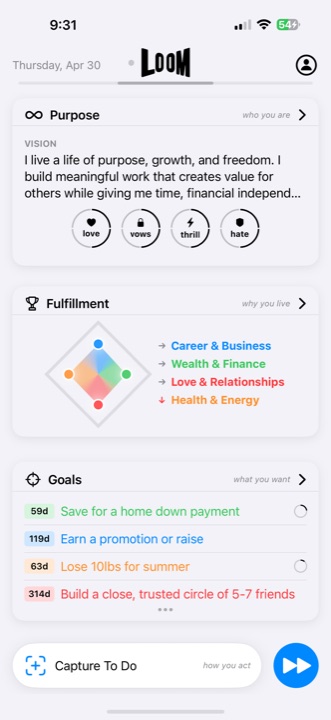
To plan your life, define the direction you want to protect, organize the important areas that require continuing care, choose a small number of Goals for the current season, turn those Goals into visible actions, and review the plan often enough to keep it truthful.
1. Clarify what matters before scheduling time
Begin with questions larger than the calendar. What do you want your life to stand for? What do you love, protect, pursue, or refuse to tolerate? Which responsibilities deserve attention even when they are not urgent?
You do not need a perfect personal mission statement. A few honest sentences are enough to guide the next decisions.
2. Define the areas you intend to care for
Choose 3–7 areas that represent your current life. They might include Career & Business, Health & Energy, Love & Relationships, Wealth & Finance, faith, learning, service, home, or a custom responsibility.
Areas are not Goals. You do not complete health or relationships. They remain part of the context in which Goals and daily choices are evaluated.
3. Choose the current changes that matter most
Ask which areas need a defined outcome during this season. A Goal should improve a real decision: what to begin, what to decline, what to measure, or what to finish.
Limit the active set. A life plan becomes less useful when it contains so many simultaneous Goals that none can influence the day.
4. Turn Goals into Action Plans
Identify finite actions that create visible progress. Mark the true Musts, add dates or duration where useful, and connect people, places, links, files, or notes when they reduce friction.
5. Protect important areas with Little Wins
Not every area needs a project. A few small repeatable actions can preserve momentum in health, relationships, learning, meaning, or money while another area receives deeper focus.
6. Review and revise
Reflection keeps the plan from becoming a historical document. Acknowledge what happened, clear stale commitments, adjust Goals and schedules, and choose the next Musts.
Example: planning the next 90 days
You choose five Fulfillment Areas. Career & Business receives one active Goal: launch a new service. Wealth & Finance receives one Goal: establish a three-month cash reserve. Health & Energy uses two Little Wins rather than a major Goal. Love & Relationships protects a weekly dinner. Mind & Meaning uses a weekly Reflection.
The plan is specific enough to influence the week without pretending all five areas deserve equal projects.
How Loom supports life planning
Loom turns this connected model into an iPhone workflow. Purpose, Fulfillment Areas, Goals, Action Plans, Little Wins, Capture, Reflection, optional Health signals, and LoomAI remain part of one system rather than separate planning documents.
Your plan is not a contract with your past self
Change the plan when responsibilities, health, relationships, or opportunities change. The useful measure is whether the structure improves present decisions—not whether you followed an outdated prediction perfectly.