

The short answer
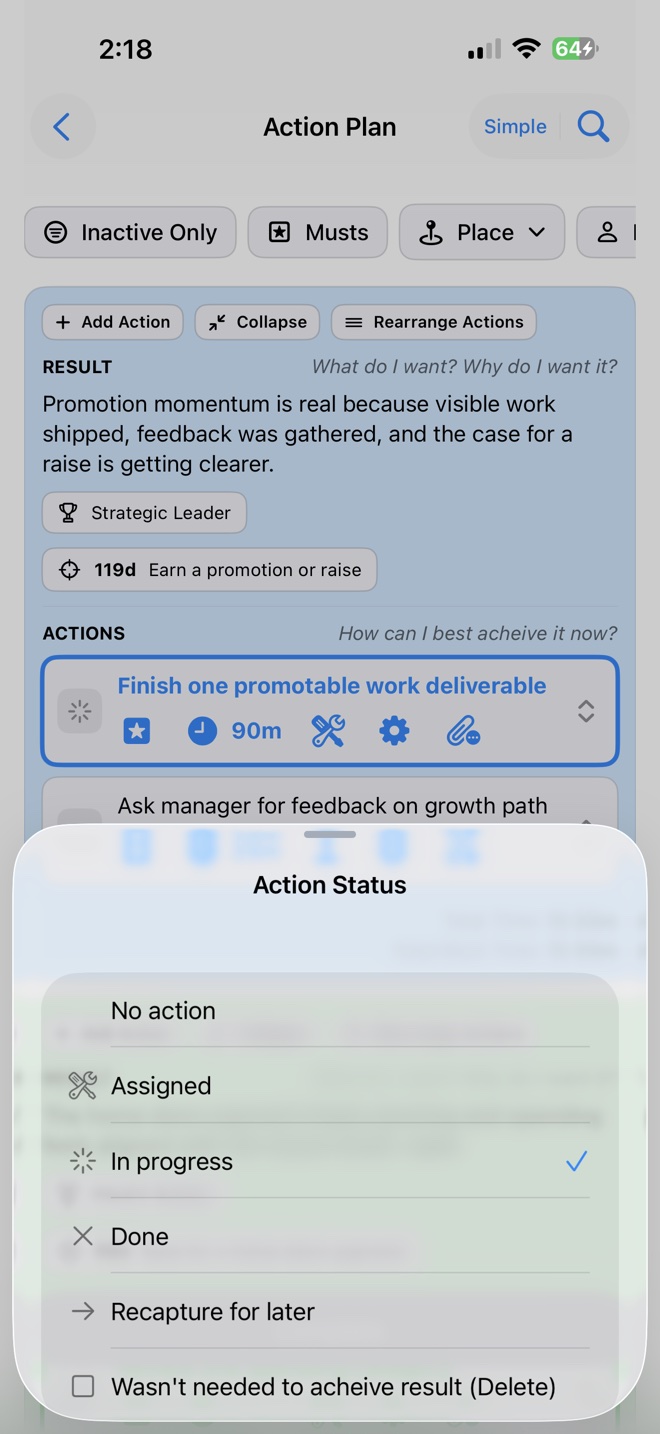
A useful weekly planning system has six steps: review the last week, scan current life areas and Goals, capture open commitments, choose three to five weekly outcomes, place only time-sensitive work on the calendar, and leave deliberate buffer. Review the plan briefly each day and revise priorities when constraints change.
The weekly view is the bridge between long-term intention and a day that is already full of meetings, messages, decisions, and personal responsibilities. It should reduce decisions during the week. If planning produces a longer list but no clearer choices, the system has not finished its job.
What belongs in a weekly plan?
Include fixed appointments, deadlines, current Goals, finite actions that can move those Goals, essential maintenance, and a small number of repeatable behaviors. Do not schedule the entire backlog. Capture possible work elsewhere so it remains available without pretending it is a current commitment.
Run this 30-minute weekly planning framework
- Review evidence from last week. Note completed work, Little Wins, changed assumptions, and unfinished commitments that still matter.
- Scan the whole life. Look across work, health, relationships, home, money, and other relevant areas before urgency chooses for you.
- Process the open inventory. Turn vague captures into a Goal, finite next action, reference note, later possibility, or deletion.
- Choose three to five weekly outcomes. Define what would make the week meaningfully successful rather than naming broad categories.
- Protect time and constraints. Put meetings, deadlines, and focused work blocks on the calendar while leaving unscheduled capacity.
- Name the first Musts. Choose the actions that should survive if the week becomes more demanding than expected.
How is weekly planning different from daily planning?
Weekly planning chooses the outcomes and tradeoffs. Daily planning responds to current capacity, new information, and the actual calendar. The week may contain five outcomes; today may have only one or two Musts. That narrowing is a feature, not a failure of ambition.
Example: a crowded professional week
A hypothetical product leader has twelve meetings, a proposal deadline, a hiring decision, a dental appointment, and a family commitment. The weekly outcomes are: send the proposal, make the hiring decision, prepare for the appointment, and protect the family event.
The plan assigns two focused blocks to the proposal, one decision block for hiring, and fixed calendar time for the personal commitments. Inbox cleanup and optional polish remain captured but do not become weekly outcomes. Each morning, the leader chooses one or two Musts from those outcomes.
Why do weekly plans become overwhelming?
Common causes are treating every capture as a commitment, filling every open hour, giving routine maintenance the same weight as meaningful outcomes, and carrying unfinished work forward without deciding whether it still matters. A calendar-only system can show capacity but not purpose. A task list can show volume but not the relationships among Goals, habits, and life areas.
A weekly review is the feedback loop. Research literature on goal setting and action planning distinguishes the desired outcome from the actions used to pursue it and emphasizes follow-up rather than one-time planning. The practical lesson is simple: choose, act, observe, and revise.
Do not turn planning into another meeting
If the review regularly takes more than an hour, reduce the number of active Goals, archive stale material, and shorten the questions. A good weekly system should be reusable during ordinary weeks, not only during a perfect Sunday setup session.
Sources and method
The planning framework is original Loom editorial analysis. For background on the distinction between goals, action plans, and follow-up, see the peer-reviewed scoping review of goal setting and action planning. Loom product claims were checked against the official App Store listing.